Ti Hero optimizes mechanisms. You care how things work, not how they are supposed to sound while working.
Ti should remain the growth-rate leader for ISTP even when Se Parent prowess steals attention.
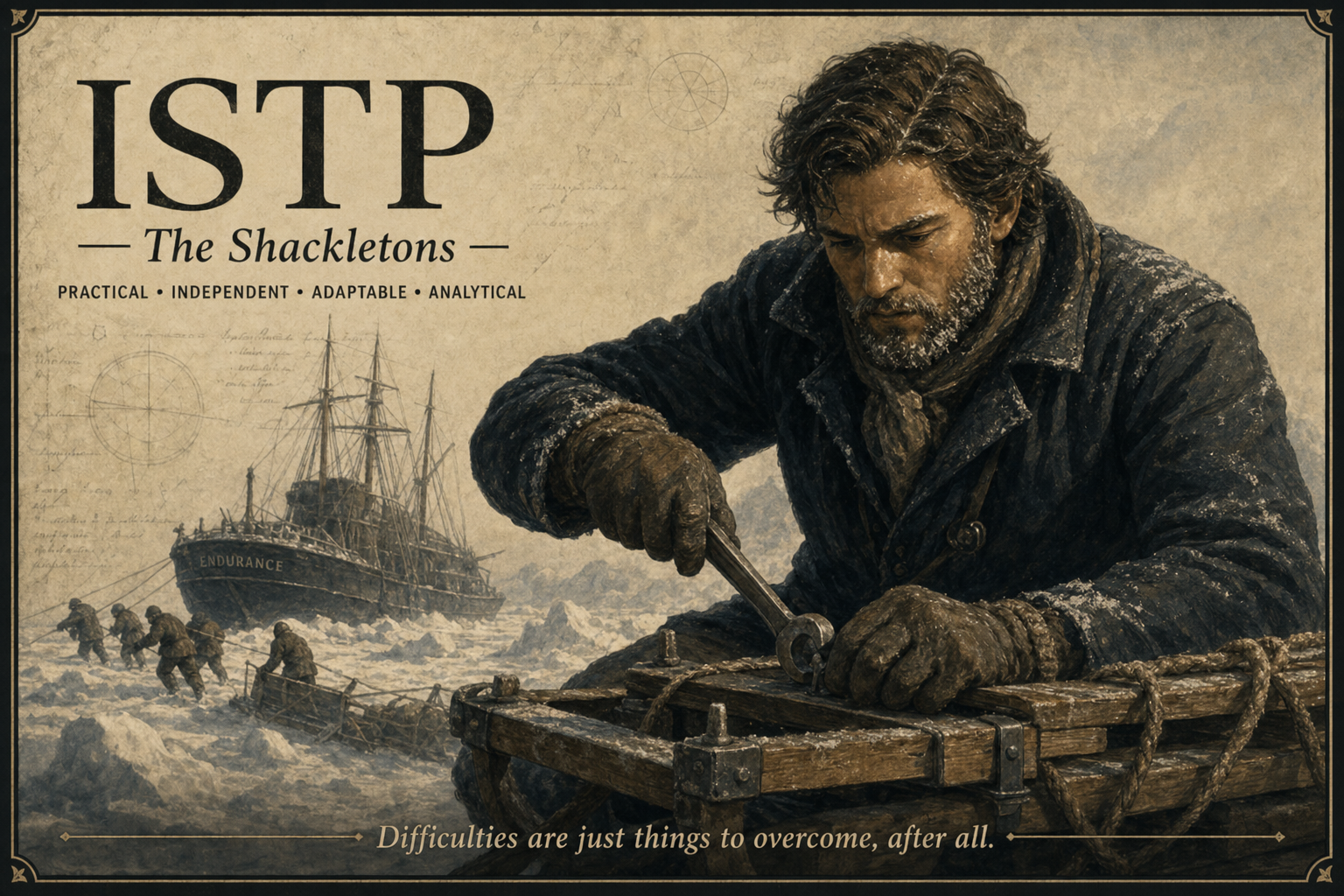
Introverted Thinking calibrates. Extraverted Sensing acts. The stack learns by touching the problem, not narrating it.
By TypologyTesting.com Editorial · Last updated: May 2026
ISTP is competence under pressure. Ti Hero disassembles systems until the logic is clear. Se Parent responds to the physical world with speed, accuracy, and minimal speech.
Virtuoso stereotypes confuse quiet hands-on skill with lack of depth. Lazy typing sees Se and assigns sensor performance without checking whether Ti truly leads. An ISTP who developed Fe Inferior charm can look like an extroverted feeler on a bad day.
This page holds the classical ISTP map. The assessment holds your measurements. Same open item bank. Same refusal to hide the math behind a black box.
ISTP conscious stack: Ti, Se, Ni, Fe. Shadow and superego: Te, Si, Ne, Fi.
Ti Hero optimizes mechanisms. You care how things work, not how they are supposed to sound while working.
Ti should remain the growth-rate leader for ISTP even when Se Parent prowess steals attention.
Se Parent puts Ti insight into motion. Tools, bodies, machines, and immediate environments are where you think best.
Integrated Se Parent produces the classic cool-headed fixer. Under stress it can tilt toward reckless immediacy.
Ni Child enjoys quiet hunches and pattern play when stakes are low. You might follow a gut read about a machine or a person without needing a speech to justify it.
Ni Child maturity adds long-game awareness without turning ISTP into a mystic caricature.
Fe Inferior is the social edge you often route around. Group emotion management costs energy. You can learn it. Training is not the same as leading with Fe.
Developed Fe Inferior helps you explain Ti-Se fixes in language teams can receive.
Te, Si, Ne, and Fi in shadow emerge when autonomy feels threatened or emotion floods the workshop.
Te Nemesis resists external control. Si Critic attacks your consistency. Ne Blind misses alternative paths. Fi Demon can erupt as harsh self-judgment about belonging when exhausted.
Highly trained Se from craft or sport is a classic INTJ mistype story in reverse: ISTP with loud Se Parent can be misread as ESTP without a full stack read.
Ti-Se precision when the stack is coherent.
Gaps the stack does not volunteer.
Development that keeps ISTP sovereignty intact.
Common ISTP confusions in communities and behavioral typing.
Take the Jungian Function Assessment, map all eight functions, and read where this type pattern actually lands in you. The full result set is free. Functions Pro adds extras around the edges. Typologists charge for human time on the marketplace. The test stays open. Sit down. Answer honestly. Contribute to the record.
